RFID Based Bottle Filling Station with PLC and HMI (Bottle Filling 2601)
PL-655851
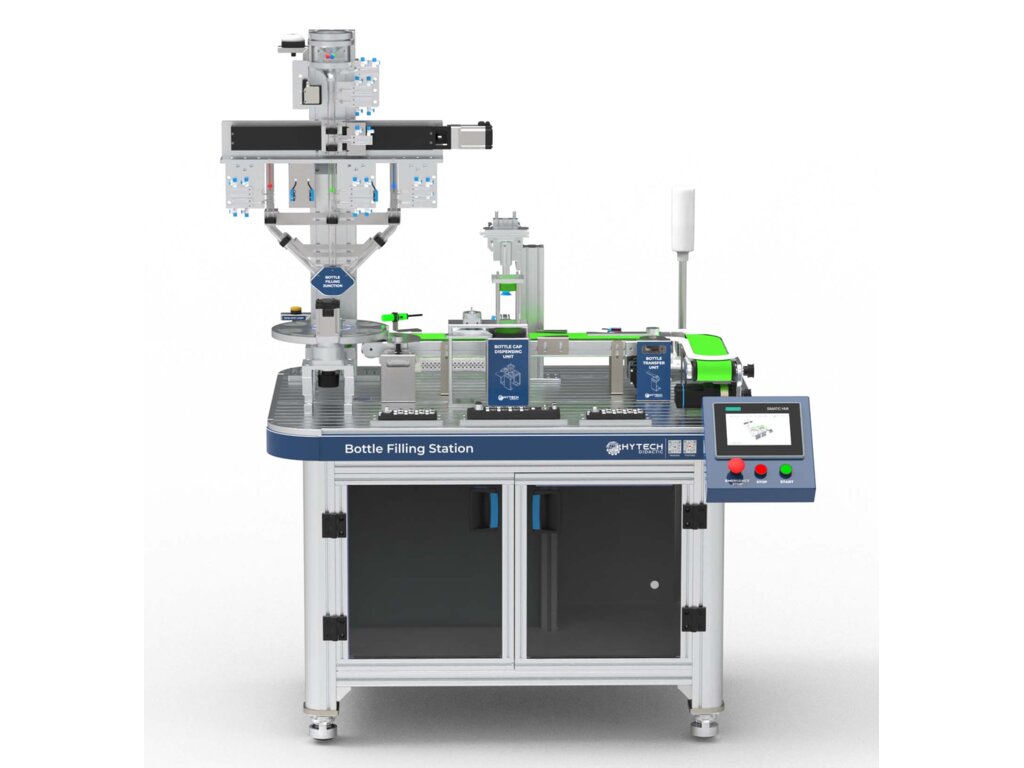
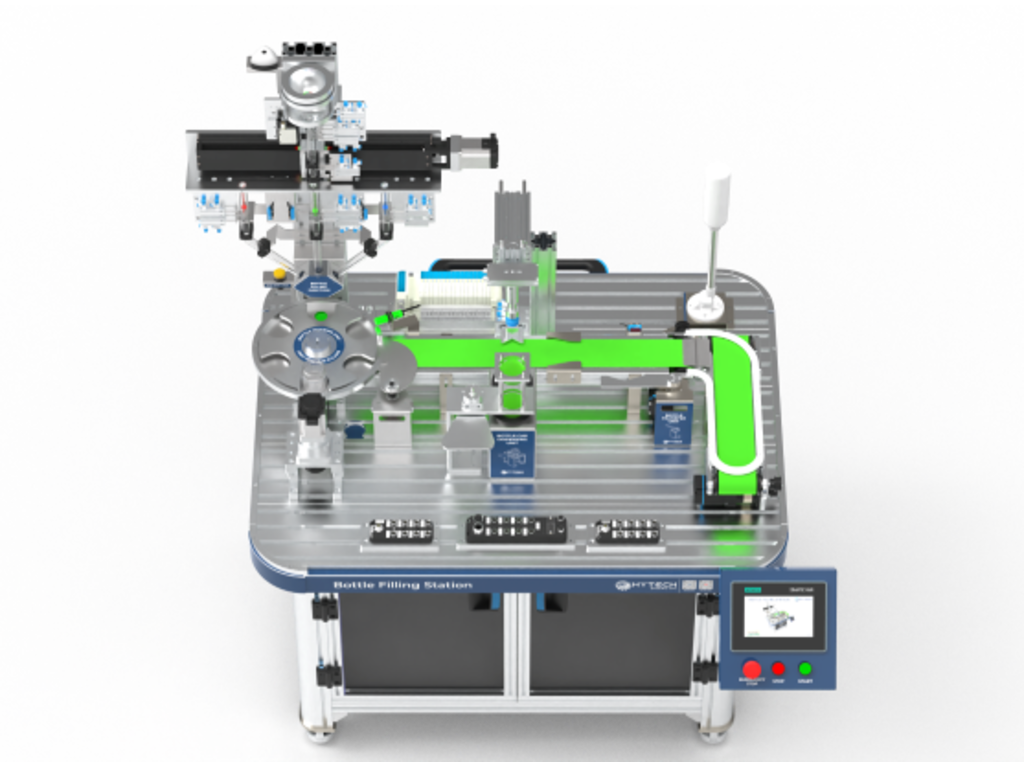
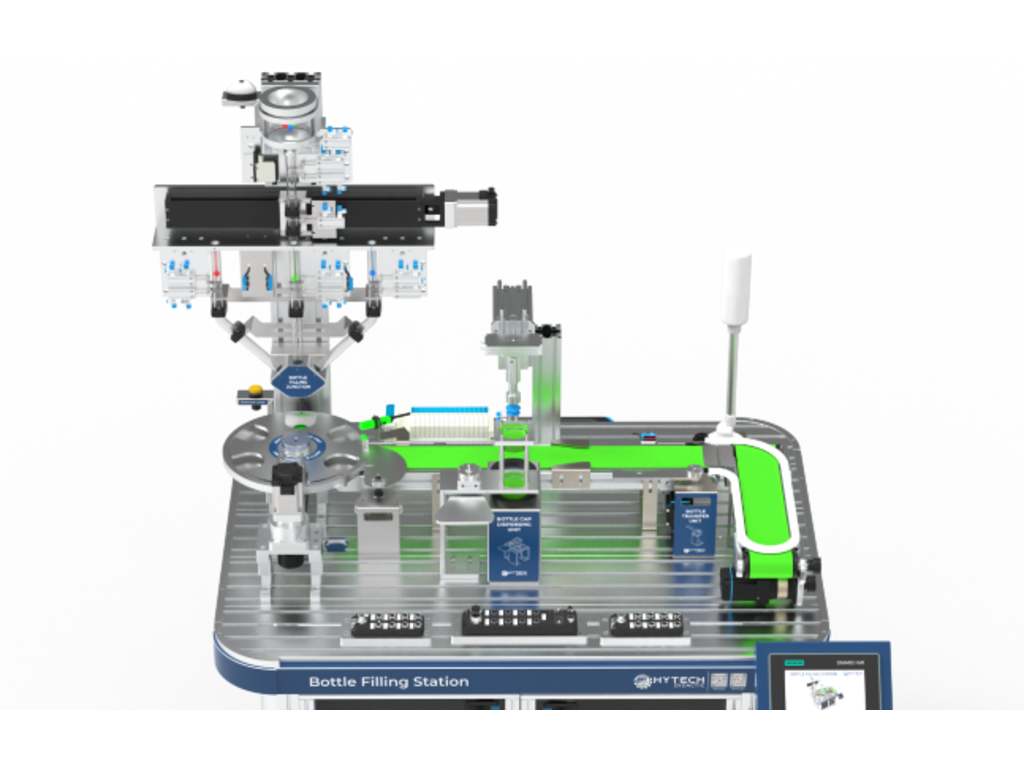
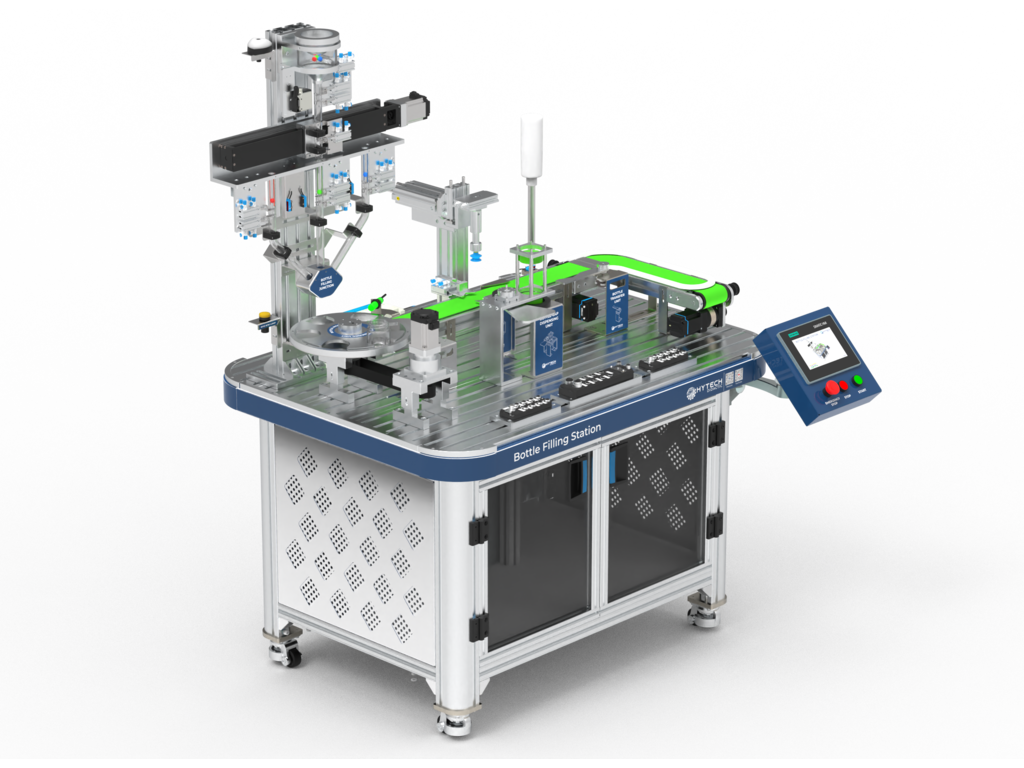
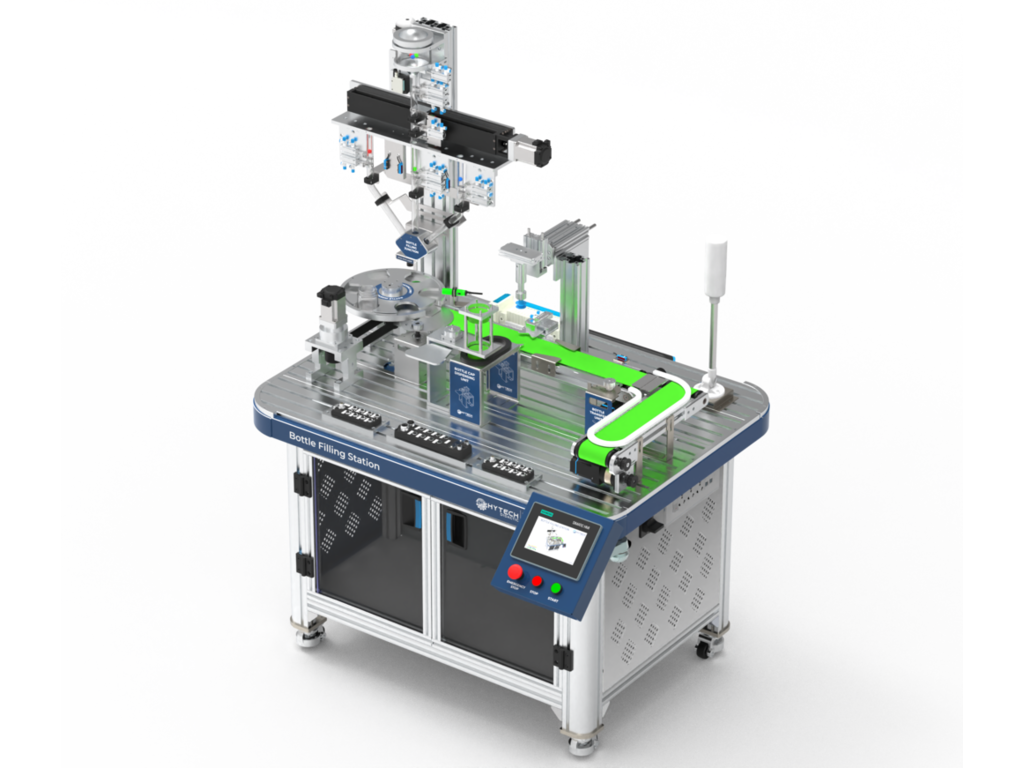
Automatic Bottle Filling Training Cell
The Automatic Bottle Filling Training Cell by Hytech Automation is an advanced Industry 4.0-ready automation training platform designed to simulate a complete intelligent bottling and packaging line. The system provides hands-on experience in PLC programming, HMI development, SCADA integration, servo motion control, RFID-based product identification, pneumatic automation, sensor integration, Digital Twin technology, and Industrial IoT.
The training cell replicates the complete lifecycle of an automated bottling process, including material sorting, RFID-based recipe identification, controlled filling, conveyor transfer, bottle positioning, pneumatic clamping, automated capping, discharge, and storage. Each operation is coordinated through industrial PLC-based control architecture, providing learners with practical exposure to real-world manufacturing systems used in food processing, pharmaceuticals, packaging, consumer goods, and smart factory environments.
The system integrates industrial technologies including color sensors, RFID readers, servo-driven rotary indexing tables, pneumatic actuators, conveyor systems, photoelectric sensors, and intelligent process monitoring. These technologies enable learners to understand industrial concepts such as sequencing, interlocking, traceability, error handling, precision motion control, production monitoring, and automated decision-making.
One of the unique features of the training cell is its RFID-based recipe management system. Each bottle carries unique identification data which determines the filling recipe. The PLC reads RFID information, controls dispensing operations, verifies filling quantities using sensor feedback, and manages downstream processes automatically. This provides hands-on experience with data-driven manufacturing and smart production systems.
The training cell includes multiple integrated automation stations:
- Ball Sorting Station using industrial colour sensors and servo-controlled sorting mechanisms
- RFID Identification and Recipe Selection Station
- Servo Indexed Filling Station with sensor-based quantity verification
- Transfer and Conveyor Control Station
- Bottle Positioning and Clamping Station
- Automated Cap Feeding and Capping Station
- Discharge and Storage Handling Station
The platform supports PLC, HMI, SCADA, and Industrial IoT integration, allowing users to monitor production status, visualize process data, generate alarms, perform diagnostics, and analyze manufacturing performance. The system is suitable for engineering colleges, vocational training institutes, industrial training centers, automation laboratories, and Industry 4.0 skill development programs.
Digital Twin & Virtual Commissioning
The training cell is integrated with Siemens NX Mechatronics Concept Designer (MCD) Digital Twin technology. The virtual model enables physics-based simulation, virtual commissioning, PLC validation, collision detection, process optimization, and hardware-in-the-loop testing. Learners can validate automation logic and optimize production workflows before executing programs on physical hardware.
Industrial IoT (IIOT) Integration
The system supports Siemens Industrial Edge and Industry 4.0 technologies for real-time data acquisition, edge-to-cloud connectivity, analytics, dashboard visualization, predictive maintenance concepts, MQTT communication, OPC UA integration, and smart manufacturing applications.
Learning Outcomes
- Understand complete automated bottling and packaging workflows
- Develop PLC programming skills for sequencing, interlocking, timers, counters, and fault handling
- Implement HMI and SCADA applications for monitoring and diagnostics
- Integrate RFID systems for recipe-based manufacturing and traceability
- Work with industrial colour sensors, photoelectric sensors, and process sensors
- Learn servo indexing and precision motion control applications
- Implement pneumatic automation and actuator control systems
- Design Industry 4.0 and IIOT-enabled manufacturing solutions
- Perform Digital Twin-based virtual commissioning and process optimization
- Gain practical skills aligned with modern smart factories and automated packaging industries
Applications
- PLC, HMI and SCADA Training
- Industrial Automation Training
- Packaging Automation Systems
- Industry 4.0 and IIOT Training
- Digital Twin and Virtual Commissioning
- Smart Manufacturing Education
- Engineering and Vocational Skill Development
Automatic Bottle Filling Training Cell – Technical Specifications
Hytech Automation's Automatic Bottle Filling Training Cell is an Industry 4.0-enabled automation training platform designed to provide hands-on experience in PLC programming, HMI development, SCADA integration, RFID-based traceability, servo motion control, pneumatic automation, Digital Twin technology, and Industrial IoT applications.
1. Automation Control System
- PLC: Siemens S7-1200 / Mitsubishi FX5
- HMI: Siemens MTP700 / Mitsubishi GT Series
- Industrial Control Panel with integrated I/O system
- Industrial Ethernet Communication
- PLC-HMI-SCADA Integration
- Real-time process monitoring and diagnostics
2. Ball Sorting Station
- Industrial Colour Sensor for material identification
- Servo Motor Controlled Sorting Mechanism
- Automatic Sorting of Red, Green, and Blue Balls
- Dedicated Storage Tubes for Sorted Materials
- PLC-based Sorting Logic and Interlocking
3. RFID Identification Station
- Industrial RFID Reader and Writer
- Bottle Identification using RFID Tags
- Recipe-Based Filling Control
- Traceability and Product Tracking Functions
- Industry 4.0 Data Management Concepts
4. Filling Station
- Servo Driven Rotary Indexing Table
- Automatic Bottle Positioning System
- Y-Type Filling Manifold
- Pneumatic Dispensing Mechanism
- Sensor-Based Quantity Verification
- Overfill and Underfill Detection Logic
- Recipe-Based Filling Operations
5. Transfer & Conveyor System
- Industrial Conveyor System
- Pneumatic Transfer Mechanism
- Photoelectric Sensors for Position Detection
- PLC Controlled Material Handling
- Interlocked Transfer Operations
6. Automated Capping Station
- Automatic Cap Feeding System
- Pneumatic Bottle Clamping Mechanism
- Z-Axis Pneumatic Actuator
- Rotary Capping Unit
- Sensor-Based Position Verification
- Automated Cap Placement and Tightening
7. Discharge & Storage Station
- Automatic Bottle Discharge System
- 90-Degree Transfer Mechanism
- Finished Product Storage Area
- Continuous Production Flow Logic
- PLC Controlled End-of-Line Operations
8. Digital Twin Integration
- Siemens NX Mechatronics Concept Designer (MCD)
- Virtual Commissioning
- Physics-Based Simulation
- PLC Logic Validation
- Collision Detection
- Cycle Time Optimization
- HMI and Automation Validation
9. Industrial IoT & Industry 4.0
- Siemens Industrial Edge Integration
- MQTT Communication
- OPC UA Connectivity
- Real-Time Data Acquisition
- Cloud-Based Monitoring
- Production Analytics Dashboard
- Remote Diagnostics & Monitoring
10. Learning Outcomes
- PLC Programming and Automation Logic Development
- HMI and SCADA Application Development
- RFID-Based Traceability Systems
- Servo Motion Control Applications
- Pneumatic Automation Integration
- Industrial Sensor Integration
- Packaging and Bottling Automation Concepts
- Digital Twin & Virtual Commissioning
- Industrial IoT & Industry 4.0 Applications
- Industrial Troubleshooting and Diagnostics
Applications
- Industrial Automation Training
- PLC-HMI-SCADA Laboratories
- Packaging Automation Training
- Industry 4.0 Skill Development
- Digital Twin Demonstration Labs
- Engineering & Vocational Training Centers
What is this?
These percentage scores are an average of 0 user reviews. To get more into detail, see each review and comments as per below
If you have used this product, support the community by submitting your review


